


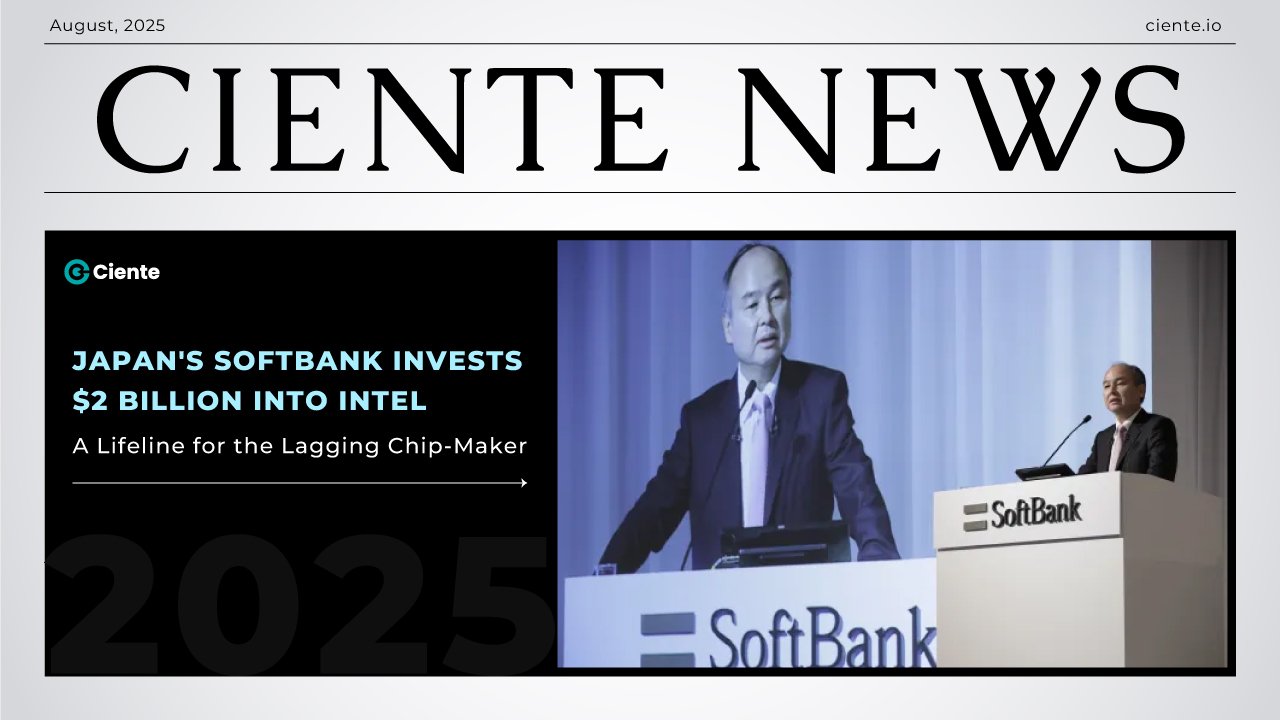
Could Softbank’s multibillion-dollar proposition help revive Intel’s innovation roadmap and translate this alliance into actual operational performance?
Intel has been lagging behind its competitors, both at its home base and overseas.
Whether it’s adopting tech advancements or the chip manufacturing front, the company has struggled in the past year. The byproduct has been slow sales and continued losses.
To navigate through these undercurrents, Lip-Bu Tan, an industry veteran, was onboarded as its CEO and tasked with a significant turnaround project. And the goal is simple: gain a technological edge in this crowded market.
Since then, Intel has taken a strategic step: partner up with Japan’s Softbank. At a rate of $23 per share, the tech investor has bought an overall 2% stake in Intel.
“Intel is very pleased to deepen our relationship with SoftBank, a company that’s at the forefront of so many areas of emerging technology and innovation and shares our commitment to advancing US technology and manufacturing leadership,” Tan chimed in.
Meanwhile, for the Japanese investor, this investment marks a crucial alliance for expanding its territory across the US. And seeks to demand that the Trump administration cut down the tariffs on chip manufacturing and distribution, citing a symbiotic exchange-
Softbank will pour billions into the US economy while Trump’s administration will relax its hold on tariffs. At least this is what the deal underscores.
The $2 billion investment comes after the US government had set its sights on Intel. And were gearing up to buy 10% into Intel by transforming grants into shares. As part of the deal, the lagging chip maker will have to develop a flagship manufacturing hub in Ohio.
So, if the deal goes through, it would make the US government the leading shareholder of Intel, surpassing the asset manager Vanguard.
However, a crucial question arises regarding the Trump administration’s intervention in yet another area of the private sector. First NVIDIA and AMD, and now Intel. The US government has placed the US chip manufacturing industry under surveillance, citing it as a nationally beneficial strategy.
Is this only a means to convert the US into “the” AI hub for the evolving future, or a politically-driven decision to constrain other countries’ access to advanced tech?
Or most crucially, both?