


The US’s trade-off from chip sales in China might reinforce the latter’s distrust in US tech. In a bid to become self-sufficient, could this intensify the looming trade war?
The US govt. has NVIDIA and AMD under the microscope. It’s acting as a gatekeeper for the two companies selling their advanced chips in China, but under keen observation.
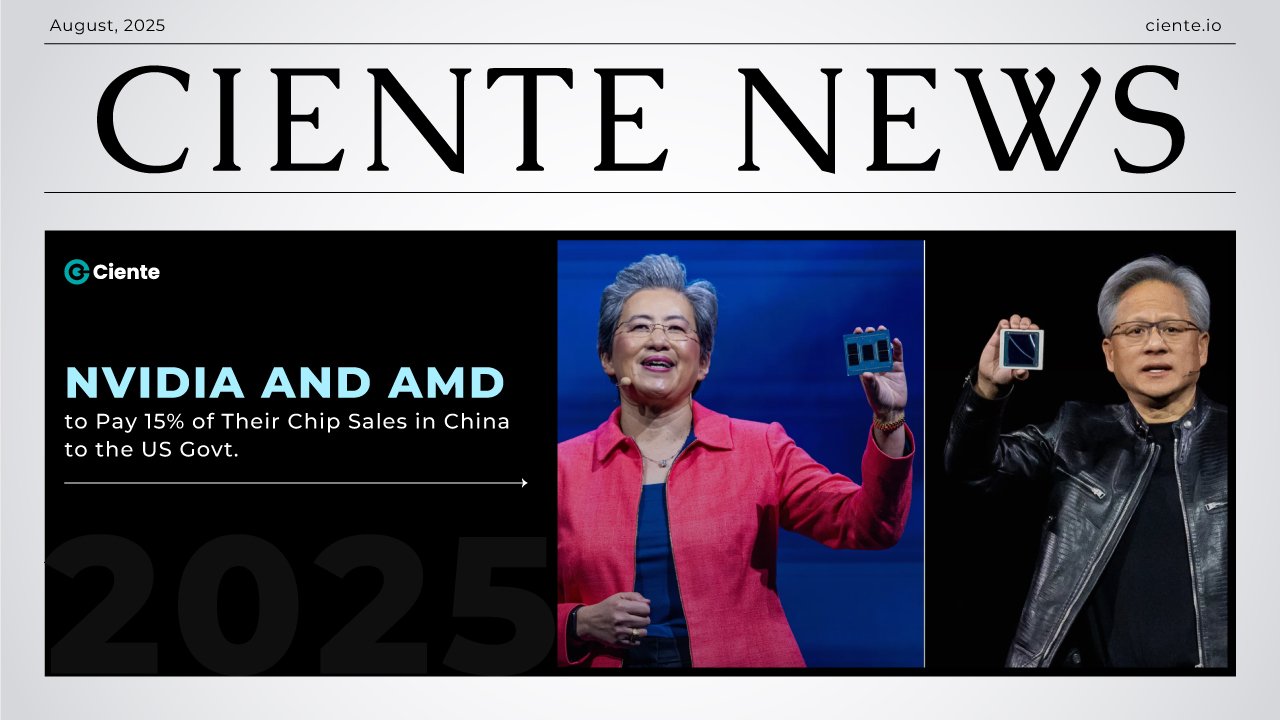
To non-disruptively sell their chips across China, NVIDIA and AMD have agreed to pay 15% of their sale to the government. It’s a simple trade-off, and a brand new one for American companies. Beforehand, no US-based company had had to do this before, so this marks a fundamental shift in how the US handles such exports, i.e., from its conventional local export policies.
Either a government allows a sale overseas, or it doesn’t. But what the government has undertaken now is a fresher model- one that says, “This is of national security concern to us, but we’ll allow it if you pay us.”
This control over exports isn’t just a simple regulation; it’s an entirely new revenue source for the US govt.
Critics are unsettled.
They demand answers regarding whether these chips pose a national security risk and why they are sold to China, albeit under this understanding. This undermines the overall logic behind export controls.
And illustrates that the govt. is simply placing a price on national security by asking for revenue shares. A disposition that would be difficult to justify in the future.
On the other hand, NVIDIA and AMD remain in muddy waters.
China is a substantial market, and the American govt. hopes to govern how and where the chips are sold, especially to restrain China’s access to advanced technology. It’ll ultimately impact the profits that the companies bring in.
For international market access, US-based businesses will need to provide tolls from their potential earnings. It could easily result in significant financial pressures and strategic uncertainty.
But this will open a new window of opportunity for chip manufacturing in China, domestically.
To navigate the expensive US chips and political undercurrents, Chinese semiconductor companies could accelerate their domestic chip production. And invest more heavily within their local borders.
In the future, this may pave the way for stronger Chinese chip competitors, such as Huawei.
But for now, there are other concerns. The government’s role here has drastically blurred. From a regulatory body to a profit-sharing business partner? The US has introduced new complexities and confusion about its role across the private sector.